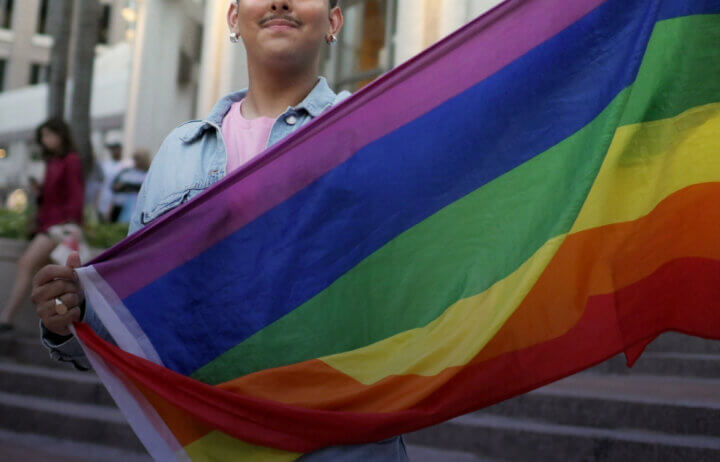
Youth's Lives Every Day
Written by: Peggy Rajski (she/her), Founder & Interim CEO at The Trevor Project
When The Trevor Project started back in 1998, research and resources dedicated to examining the day-to-day experiences of LGBTQ+ young people were very limited. Today, while we still have miles to go, I’m proud we can point to how much The Trevor Project has contributed toward closing that gap. Our top-tier research program, composed of leading scientists and experts in the field of LGBTQ+ youth mental health, is dedicated to better understanding both the risk factors and the protective factors impacting this country’s public health crisis of suicide among LGBTQ+ youth.
To recognize the beginning of Mental Health Awareness Month, I am pleased to announce the publication of the sixth edition of The Trevor Project’s U.S. National Survey on the Mental Health of LGBTQ+ Young People. One of the largest and most diverse of its kind, this survey represents input from more than 18,000 LGBTQ+ youth across the U.S., and plays a critical role in the timely illumination of LGBTQ+ young people’s current experiences in this country.
This survey sheds a topical light on what Trevor’s prior research documented: LGBTQ+ young people are disproportionately impacted by suicide compared to their straight, cisgender peers. Thirty-nine percent of LGBTQ+ young people seriously considered attempting suicide in the past year, including 46% of transgender and nonbinary young people. In spite of these high rates, 50% of LGBTQ+ young people who wanted mental health care in the past year were not able to get it. This tells us that many young people out there are fully aware they need help, yet still face barriers to receiving the care and support they need.
We’ve long known that LGBTQ+ young people frequently face unique challenges — not because of how they inherently identify, but because of how they are mistreated and stigmatized because of their identity. One of the most striking findings, in my opinion, is that an overwhelming 90% of LGBTQ+ young people said recent politics negatively impacted their mental health.
Given the historic wave of anti-LGBTQ+ legislation being considered across the country, this finding is not surprising. But it is an urgent reminder that collective action is needed in order to protect our beloved LGBTQ+ youth. This isn’t simply a political issue; it’s an issue that is adversely impacting young people’s mental health and putting their very lives at risk.
Fortunately, our survey also highlights ways we can all support the LGBTQ+ young people in our lives — including affirming how they identify, standing up for them in front of other people, and not supporting politicians that advocate for anti-LGBTQ+ legislation. Trevor’s findings add to a large body of established research that consistently indicates LGBTQ+ young people report lower rates of attempting suicide when they have access to affirming spaces and communities.
I am grateful for the thousands of LGBTQ+ young people who took this survey — honestly sharing their experiences to promote progress, education, and understanding for themselves and their peers. I encourage researchers, policymakers, educators, and other youth-facing professionals to use this survey to help support LGBTQ+ young people in their communities. We invite you to join us as we work to create a world where all LGBTQ+ young people feel safe, seen, loved and accepted exactly as they are.